
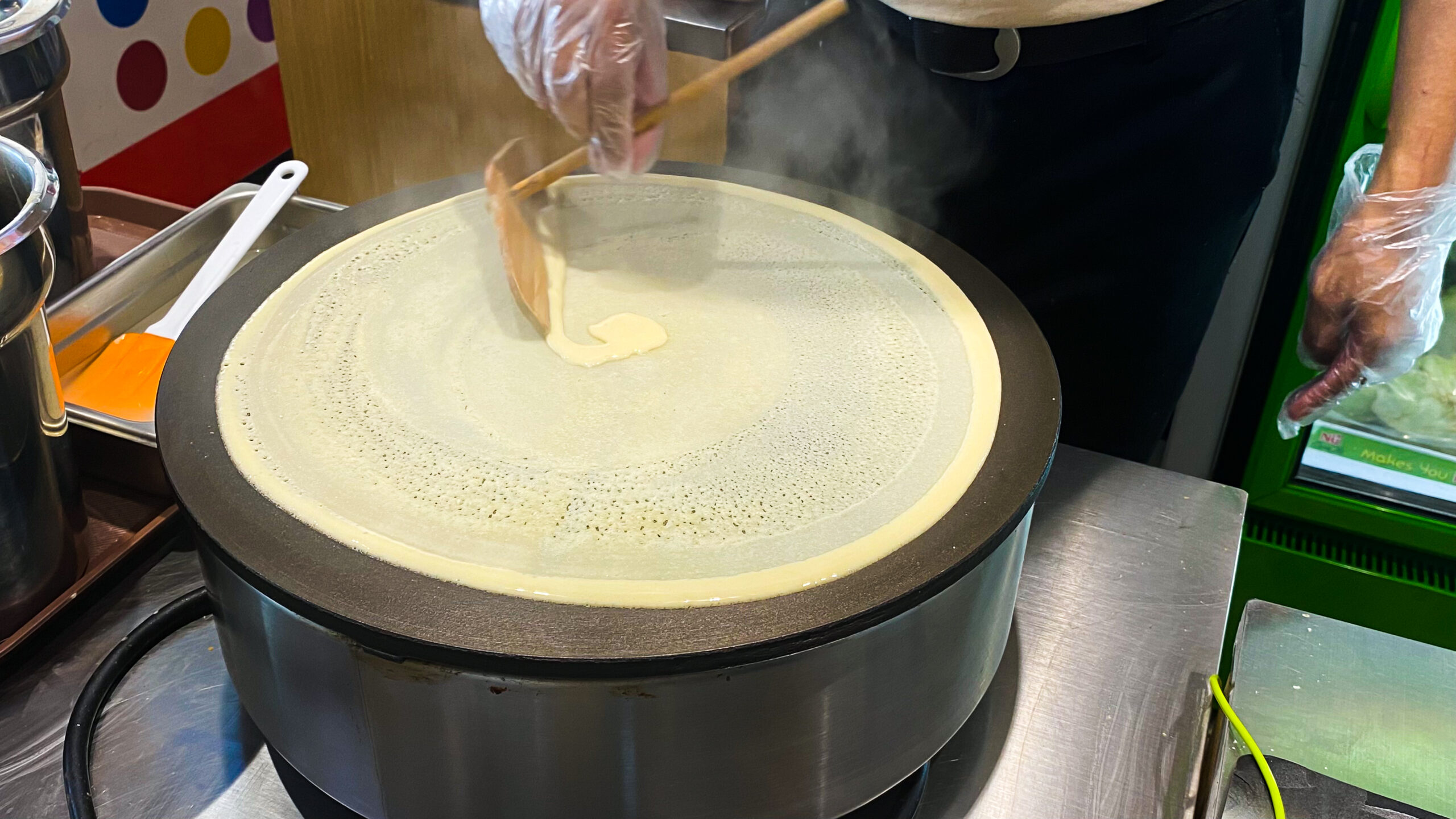
Choosing the best commercial crepe mix is not about preference.
It is about performance.
In restaurant environments, crepes must be produced quickly, consistently, and without failure during service. A mix that performs well in small batches but breaks down under pressure is not suitable for commercial use.
The best commercial crepe mix is one that delivers consistent batter, reliable cooking performance, and a repeatable process across every shift.
For most operators, that means moving away from variable recipes and toward a controlled, commercial formulation.
Why Crepe Mix Quality Matters More Than You Think
Crepes are one of the most sensitive menu items to produce.
They are thin, require even spreading, and must remain flexible without tearing. Small inconsistencies in batter immediately show up in the final product.
In a busy kitchen, this creates risk.
If the mix is not consistent:
Crepes may tear
Batter may not spread evenly
Cooking times may vary
Staff must constantly adjust
This slows production and increases waste.
The right mix eliminates these variables.
What Defines the “Best” Commercial Crepe Mix
The best mix is not the cheapest or the most widely available.
It is the one that performs reliably under real kitchen conditions.
There are four key factors operators should evaluate.
1. Consistent Batter Performance
The batter must behave the same way every time.
This includes:
Smooth, even spreading
Stable texture
Reliable cooking results
Consistency is what allows kitchens to maintain quality across batches and staff.
2. Simple Preparation Process
Complex preparation slows down service.
The best commercial mixes use a simplified process that reduces variability.
Alamarra’s Original Style Crepe Mix uses a just-add-water method, allowing kitchens to produce consistent batter without measuring or adjusting ingredients.
This removes one of the biggest sources of error in crepe production.
3. Performance Under Pressure
Restaurant kitchens operate at speed.
The mix must perform during continuous production without breaking down or requiring adjustments.
This means:
Stable batter over time
Reliable structure during cooking
Consistent results across high volume
A mix that only works in controlled conditions is not suitable for commercial use.
4. Scalability Across Operations
The best mix works the same way regardless of volume.
Whether producing small batches or running high-volume service, the results should remain consistent.
This is especially important for:
Multi-location operations
Creperies
High-turnover kitchens
Scalability ensures long-term reliability.
Why Formulation Determines Performance
Crepe batter must balance structure, hydration, and heat response.
If any of these variables are off, performance suffers.
Too much moisture weakens the batter and leads to tearing. Too little moisture prevents proper spreading. Inconsistent formulation creates uneven cooking results.
A commercial mix controls these variables in advance.
This allows kitchens to produce consistent crepes without adjusting the process during service.
Comparing Commercial Crepe Mix Options
| Factor | Retail/Basic Mix | Commercial Crepe Mix |
|---|---|---|
| Consistency | Variable | Stable |
| Prep Complexity | Higher | Simplified |
| Batch Reliability | Limited | High |
| Scalability | Difficult | Designed for volume |
| Performance | Inconsistent | Predictable |
The difference comes down to formulation and intended use.
Why Restaurants Choose Alamarra
Operators choose a mix based on performance, not marketing.
Alamarra’s Original Style Crepe Mix is designed specifically for commercial kitchens, delivering consistent batter and reliable results across all service conditions.
The just-add-water process simplifies preparation, while the formulation ensures smooth spreading and stable structure during cooking.
This allows restaurants to:
Maintain consistent product quality
Reduce waste from failed crepes
Improve service speed
Simplify staff training
The result is a more controlled and efficient production system.
Supporting Menu Flexibility
The best crepe mix should support a wide range of menu applications.
Crepes can be used for:
Sweet breakfast items
Savory dishes
Dessert-style offerings
A consistent base allows operators to expand their menu without adding complexity.
Many kitchens pair:
Original Style Crepe Mix for core items
Golden Crepe Mix for richer texture
Buckwheat Crepe Mix for savory options
Original Style Crepe Mix Gluten Free for dietary needs
Each option maintains the same preparation method.
Ingredient Standards and Reliability
Ingredient quality plays a role in both performance and perception.
Alamarra’s crepe mixes are GMO free and preservative free. They are also soy free and contain zero trans fats.
Gluten free options are produced in separate facilities to reduce cross-contact risk.
Reliable ingredients support consistent results.
Reducing Risk in Crepe Production
Inconsistent crepe mix creates operational risk.
Failed batches, tearing, and uneven results slow down service and increase waste.
A consistent commercial mix reduces these risks.
Predictable batter leads to predictable output.
This allows kitchens to operate with greater confidence during service.
FAQs About Commercial Crepe Mix
The best mix delivers consistent batter, simple preparation, and reliable performance in high-volume kitchens.
Crepes are sensitive to variation, so consistent batter is essential for even cooking and durability.
Yes. It simplifies preparation and reduces the need for adjustments during service.
It is designed for high-volume production, stable performance, and repeatable results.
Yes. Simpler methods reduce errors and improve consistency across staff.
For operators, the right mix is what turns crepe production into a controlled system.
Choosing the Right Crepe Mix for Your Kitchen
The best commercial crepe mix is not about preference.
It is about performance, consistency, and reliability.
When the mix is stable, the process becomes predictable. When the process is predictable, kitchens operate more efficiently.
Alamarra’s Original Style Crepe Mix provides a consistent, commercial-grade foundation that allows restaurants to produce high-quality crepes without added complexity.
For operators, the right mix is what turns crepe production into a controlled system.