
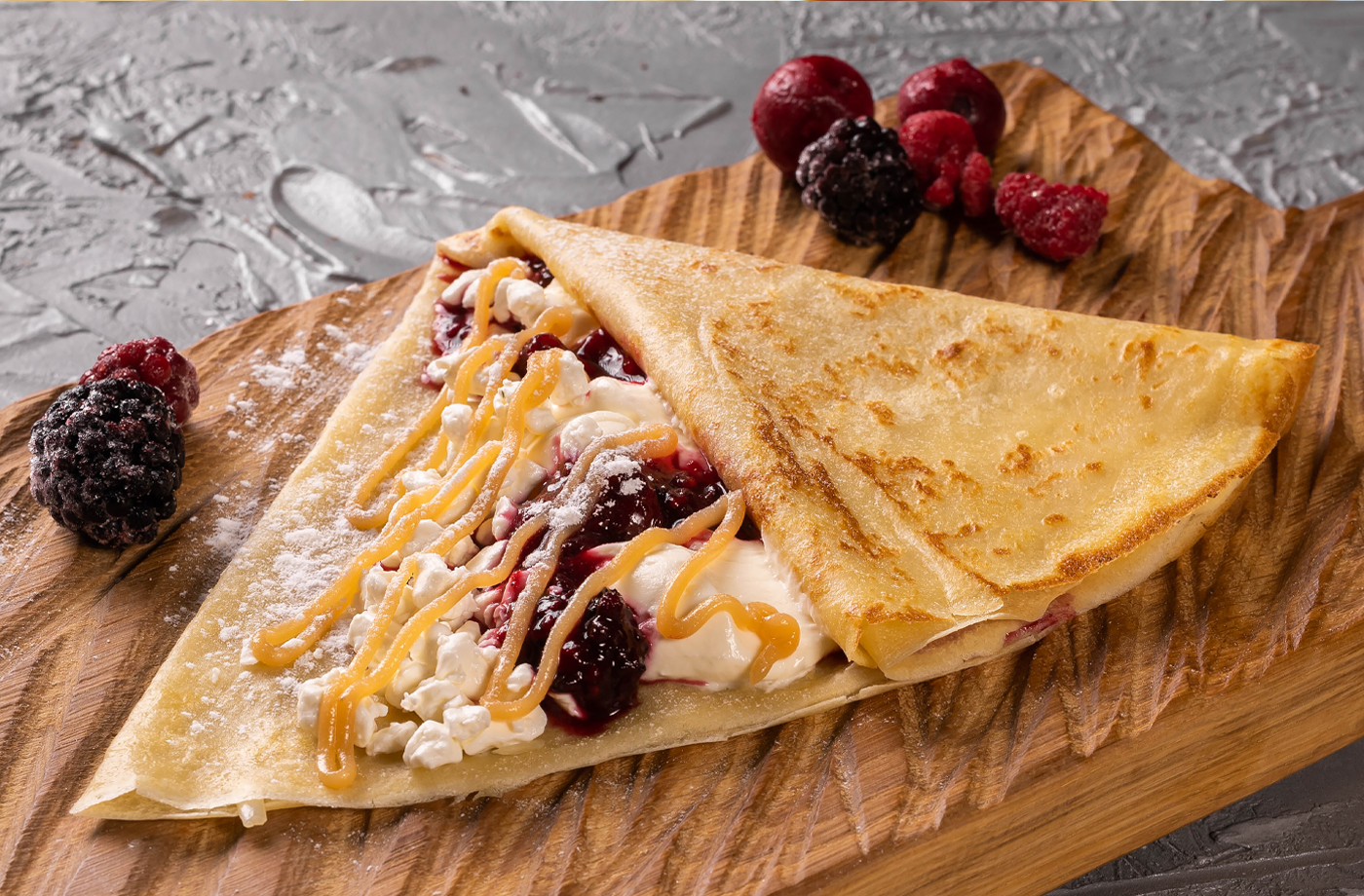
Dessert menus are where creativity meets profitability.
For cafés and dessert bars, the goal is to offer items that stand out while still being easy to execute. Many dessert menus become complicated over time, requiring multiple ingredients, preparation steps, and training.
Crepes offer a simpler path.
They allow operators to create a wide range of dessert options using a single, consistent base, making them one of the most flexible additions to any dessert-focused menu.
Variety does not have to increase complexity.
Why Crepes Work for Dessert Menus
Crepes are built for customization.
Their thin, flexible structure makes them ideal for pairing with a wide range of sweet ingredients. This allows cafés and dessert bars to create visually appealing and high-value items without changing the production process.
Unlike other desserts that require separate preparation methods, crepes rely on one consistent workflow.
Alamarra’s Original Style Crepe Mix is designed to deliver consistent performance in commercial kitchens, allowing operators to build multiple dessert items from a single base.
Consistency in the base creates flexibility in the menu.
Build a Dessert Menu That Stands Out with Alamarra Crepe Mix →
Building a Dessert Crepe Menu That Sells
A strong dessert menu is not about offering everything.
It is about offering the right mix of items that are easy to produce and appealing to customers. Crepes allow operators to create a structured dessert menu without adding complexity behind the scenes.
Most successful dessert crepe menus are built around a few key categories.
Classic Sweet Crepes
Classic options are essential.
These are the items customers expect to see and are often the most frequently ordered. They are simple, reliable, and quick to prepare.
Options in this category typically focus on familiar flavor combinations. Because the preparation stays consistent, these items are easy to execute during high-volume periods.
They also serve as the foundation for the rest of the menu.
Chocolate-Based Dessert Crepes
Chocolate is one of the strongest drivers in dessert menus.
Crepes pair well with chocolate because they can hold fillings and toppings without becoming heavy. This makes them ideal for indulgent dessert items that still feel balanced.
Alamarra’s Chocolate Crepe Mix and Chocolate Instant Crepe Mix allow operators to build chocolate-focused menu items without changing the preparation process.
This creates an easy path to higher-value offerings.
Chocolate-based crepes also photograph well, which supports social and visual marketing.
Japanese-Style Dessert Crepes
Japanese-style crepes have become increasingly popular in dessert-focused concepts.
They are known for their presentation and layered fillings, often served as a handheld dessert. This format works well in cafés, dessert bars, and kiosks where portability matters.
Alamarra’s Japanese Crepe Mix supports this style with consistent performance, making it easier to execute visually appealing menu items.
These crepes help differentiate the menu and attract customers looking for something unique.
Premium and Specialty Crepes
Premium items increase average ticket value.
These are typically built using higher-end ingredients or more elaborate presentations. The key advantage with crepes is that these upgrades do not require a new process.
Operators can introduce specialty items while maintaining the same workflow.
This allows dessert menus to evolve without increasing complexity in the kitchen.
Balancing Creativity and Efficiency
Dessert menus often become difficult to manage when creativity is not balanced with execution.
Adding too many unique items can slow down service and increase the chance of errors. Crepes allow operators to stay creative while keeping the process controlled.
Because the base remains the same, new ideas can be tested without disrupting operations.
This balance between creativity and efficiency is what makes crepes valuable for dessert-focused businesses.
Adapting Dessert Crepe Menus for Different Concepts
Not all dessert programs operate the same way.
Cafés often focus on speed and repeat orders. Crepes fit well because they can be produced quickly while still offering customization.
Dessert bars typically emphasize presentation and variety. Crepes support this by allowing layered and visually appealing items without changing the underlying process.
Both concepts benefit from the same system.
One base supports different service styles without requiring operational changes.
Seasonal Dessert Opportunities
Seasonal menus keep dessert offerings fresh.
Crepes make seasonal updates easy because operators can introduce new flavors without changing preparation methods. This allows cafés and dessert bars to stay relevant throughout the year.
Seasonal variations can be added or removed without affecting the core menu structure.
This flexibility supports both creativity and consistency.
Operational Advantages of Dessert Crepes
Dessert menus should support the kitchen, not slow it down.
Crepe-based systems help maintain efficiency because they reduce the number of processes required to produce multiple items.
This leads to:
- Faster production during peak hours
- Easier staff training
- More consistent results across shifts
These advantages are built into the system, not added later.
Ingredient Consistency and Performance
Reliable ingredients are essential for consistent execution.
Alamarra’s crepe mixes are GMO free and preservative free. They are also soy free and contain zero trans fats. Gluten-free options are produced in separate facilities to reduce cross-contact risk.
Consistent performance allows dessert menus to operate smoothly even during high-volume service.
FAQs About Dessert Crepe Menus
A Smarter Way to Build a Dessert Menu
Dessert menus should be creative, but they also need to be manageable.
Crepes allow cafés and dessert bars to offer a wide range of options without increasing complexity behind the scenes. They support flexibility, improve efficiency, and create opportunities for higher-value items.
Alamarra’s Original Style Crepe Mix provides a consistent foundation that helps operators build dessert menus that are both creative and operationally efficient.