
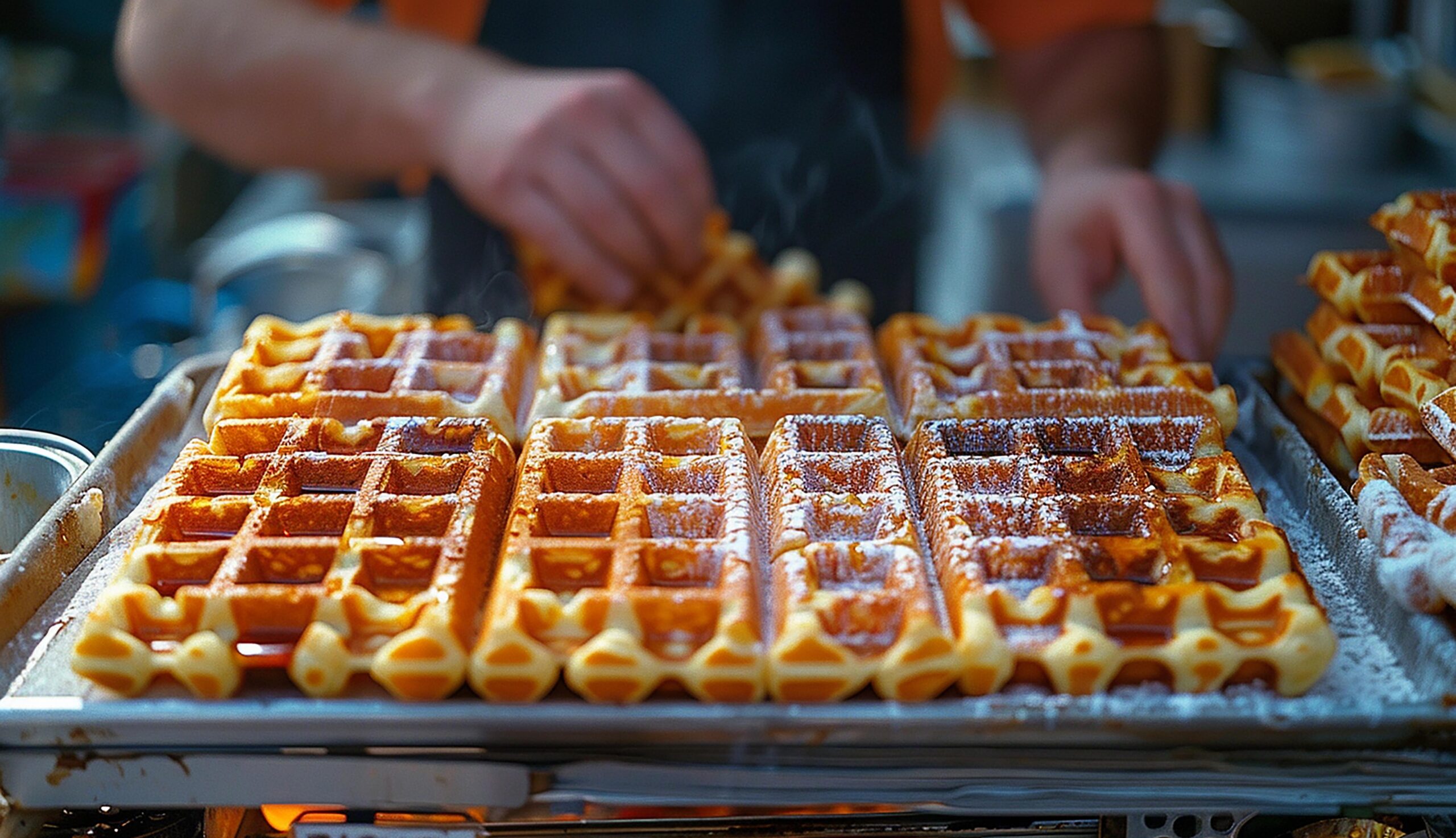
If your food truck serves waffles, speed and consistency determine how many customers you can serve.
Lines build quickly, space is limited, and every delay affects output. When batter varies, service slows and product quality becomes inconsistent.
That is why many food truck operators rely on commercial solutions like Alamarra’s Pancake and Waffle Mix, designed to deliver consistent results with a simplified process.
In a mobile kitchen, efficiency is not optional. It is the system that keeps service moving.
Where Waffle Service Slows Down
Most food trucks are not limited by equipment. They are limited by preparation.
Standard mixes and scratch batter require measuring, added ingredients, and adjustments. Each step introduces variation, especially in a fast-paced environment where consistency is harder to maintain.
When batter changes from batch to batch, waffles cook differently. This leads to uneven texture, inconsistent timing, and interruptions during service.
Preparation becomes the bottleneck, not cooking.
A Simpler Process That Improves Output
The most effective way to improve speed is to remove unnecessary steps.
Alamarra’s Pancake and Waffle Mix is formulated to work with water only, eliminating the need for oil or additional ingredients.
The process becomes straightforward. Add water, mix, and cook.
Because the formulation is controlled, the batter performs consistently across every batch. This allows operators to maintain a steady workflow without stopping to adjust or correct.
Why Fewer Steps Mean Faster Service
In a food truck, every second affects how many orders can be completed.
Extra preparation steps slow down the line. Measuring ingredients or adjusting batter may seem small, but those seconds add up during peak service.
A simplified process improves:
Ticket speed
Order volume
Workflow consistency
When preparation is consistent, staff can focus on cooking and serving instead of troubleshooting.
Speed comes from predictability.
What Controls Waffle Performance
Waffle texture depends on three variables: fat ratio, moisture balance, and heat consistency.
Fat content creates structure and surface texture. Moisture controls how the batter sets. Heat drives browning and crispness.
When these variables shift, results change.
A properly formulated mix controls these variables before cooking begins.
This allows waffles to cook consistently, even in high-pressure environments.
Standard Mix vs Food Truck-Ready Mix
| Factor | Standard Mix | Alamarra Commercial Mix |
|---|---|---|
| Ingredients Needed | Water plus oil or butter | Just water |
| Prep Speed | Slower | Faster |
| Consistency | Variable | Stable |
| Space Requirements | More storage | Minimal |
| Output | Inconsistent | Predictable |
In a mobile kitchen, simplicity improves performance.
Working Within Limited Space
Space is one of the biggest constraints on a food truck.
Every ingredient takes up storage. Every container adds complexity. Managing multiple components slows movement and reduces efficiency.
A simplified mix reduces the need for additional ingredients and equipment.
This keeps the workspace organized and allows staff to move more efficiently during service.
Less clutter leads to better workflow.
Maintaining Quality Under Pressure
Food trucks operate in high-pressure environments.
During peak hours, consistency becomes harder to maintain. Complex processes increase the likelihood of mistakes, especially when speed is required.
A standardized mix ensures that batter performs the same way every time.
This leads to uniform texture, stable cooking performance, and consistent results across orders.
Quality remains stable even during high-volume service.
Product Flexibility Without Adding Complexity
Many food trucks offer multiple menu options, including waffles, pancakes, and dessert variations.
A standardized mix allows operators to expand offerings without changing the preparation process.
Common options include:
Vanilla Pancake and Waffle Mix for core menu items
Chocolate Pancake and Waffle Mix for dessert-style waffles
Vanilla Pancake and Waffle Mix Gluten Free for allergen-conscious customers
Each product uses the same preparation method, which keeps operations simple.
Ingredient Standards That Support Your Brand
Customers expect quality, even in mobile food service.
Alamarra’s mixes are GMO free and preservative free. They are also soy free and contain zero trans fats.
Gluten free products are produced in separate facilities to reduce cross-contact risk.
This allows operators to maintain consistent performance while meeting customer expectations.
Scaling a Food Truck Operation
As demand grows, maintaining consistency becomes more difficult.
Longer lines and higher volume increase pressure on both staff and process. Without a standardized system, variability increases as production scales.
A commercial mix supports growth by maintaining consistent results, reducing training time, and allowing faster production during busy periods.
Scaling becomes manageable when the process stays consistent.
FAQs About Waffle Mix for Food Trucks
The best waffle mix delivers consistent results, requires minimal preparation, and supports fast service during high-demand periods.
It eliminates prep steps, reduces errors, and allows operators to maintain consistent batter performance in limited space.
Yes. A simplified mix reduces preparation time and allows faster production, increasing overall output.
Yes. A standardized mix ensures consistent results across batches, even during peak service.
Most standard mixes require added fat. Alamarra’s does not, which simplifies preparation.
It reduces preparation steps, saves space, and allows consistent output without adjusting recipes.
A Better Way to Run Waffle Service on a Food Truck
Food truck operations depend on speed, consistency, and efficiency.
When batter is standardized, production becomes predictable and easier to manage. Staff can focus on serving customers instead of adjusting recipes.
Alamarra’s Pancake and Waffle Mix provides a reliable foundation for fast, consistent waffle production in mobile kitchens.
More food trucks across the United States and Canada are moving toward simplified systems that improve both output and quality.