
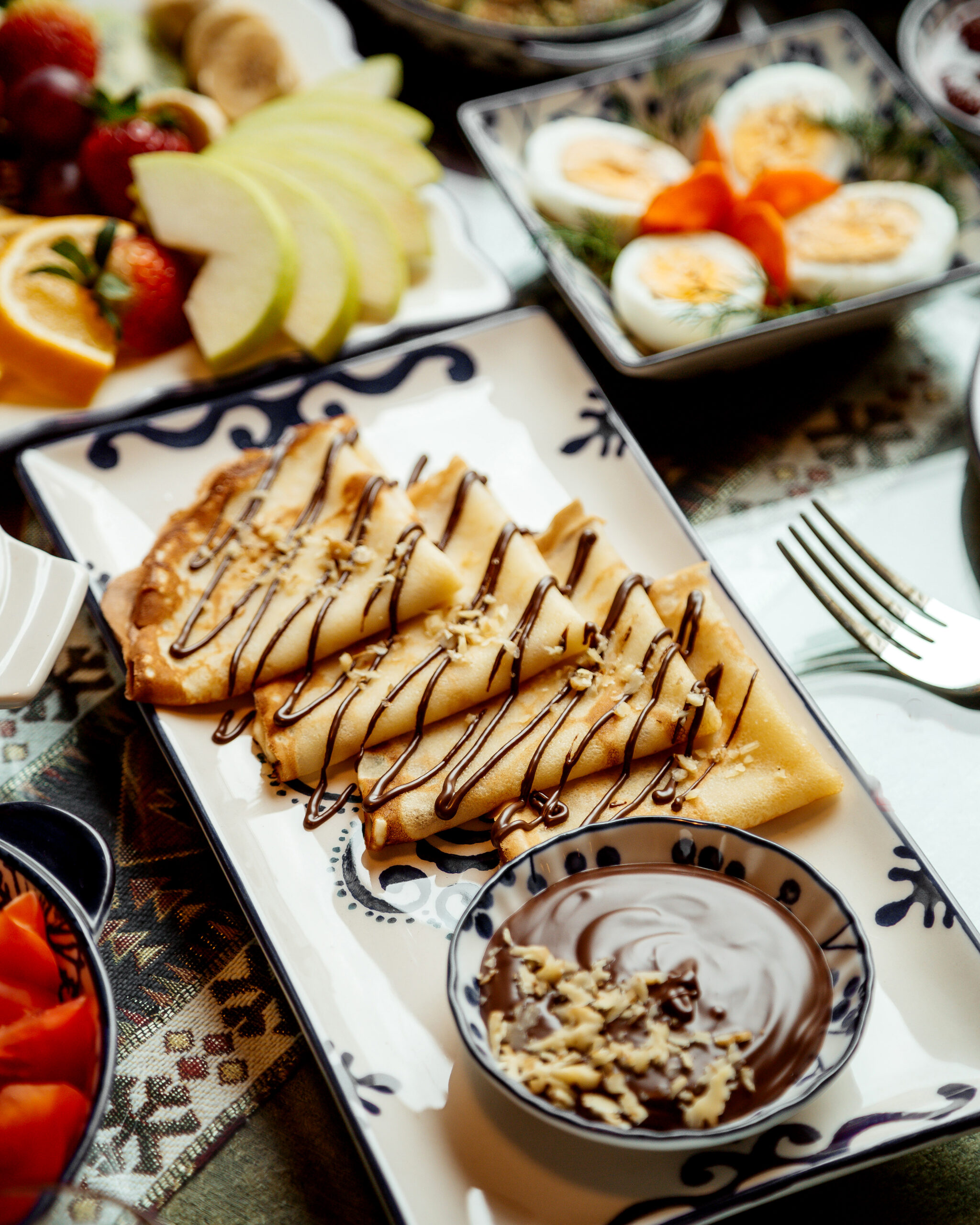
Making crepes consistently is not about guesswork.
It is about control.
In both commercial kitchens and home setups, crepes require a thin, even batter, stable heat, and proper technique. Small mistakes show up immediately in the final result.
Using a properly formulated crepe mix like Alamarra’s Original Style Crepe Mix simplifies this process, allowing you to produce smooth, flexible crepes with consistent results every time.
The goal is not just to make crepes. It is to make them the same way every time.
Why Use a Crepe Mix Instead of Starting from Scratch
Scratch recipes rely on precision.
Multiple ingredients must be measured correctly. Mixing must be consistent. Hydration levels must be adjusted if anything changes.
That introduces variability.
A crepe mix removes that uncertainty.
Alamarra’s Original Style Crepe Mix is designed to create a balanced batter with a simple just-add-water process.
This allows you to focus on technique instead of managing ingredients.
What You Need
The process is straightforward.
Alamarra Original Style Crepe Mix
Water
Mixing bowl
Whisk or blender
Nonstick pan or crepe griddle
Flat spatula
No additional ingredients are required.
How to Make Crepes with a Mix
Step 1: Mix the Batter
Combine the crepe mix with water according to the recommended ratio.
Whisk until the batter is smooth and free of lumps. The consistency should be thin and pourable.
The batter can be used immediately after mixing
.
If it sits for an extended period, stir it again before use to maintain consistency.
Step 2: Preheat the Cooking Surface
Heat your pan or griddle to a consistent medium temperature.
This step matters.
If the surface is too cool, the batter will not set properly. If it is too hot, the crepe may cook unevenly or become brittle.
A stable temperature ensures even cooking from edge to center.
Step 3: Pour and Spread Quickly
Pour a small amount of batter into the center of the pan.
Immediately tilt or spread the batter to create a thin, even layer.
Timing is critical.
If you wait too long, the batter begins to set before it spreads, which leads to uneven thickness.
Step 4: Let the Crepe Set Before Flipping
Allow the crepe to cook until the edges begin to lift slightly from the surface.
This indicates that structure has formed.
Do not flip too early.
If the crepe has not fully set, it will tear during handling.
Step 5: Flip and Finish
Use a thin, flexible spatula to lift and flip the crepe.
Cook the second side briefly.
The crepe should remain soft and flexible while holding its shape.
Step 6: Stack and Hold Properly
Stack finished crepes and keep them lightly covered.
This prevents them from drying out and helps maintain flexibility until serving.
Technique Tips That Make the Biggest Difference
Crepe consistency depends as much on technique as it does on batter.
Spreading should be smooth and immediate. Delays create uneven layers.
Flipping should be timed correctly. The crepe must release naturally before turning.
Handling should be minimal. Overworking the crepe increases the chance of tearing.
The cooking surface must remain consistent throughout production.
When technique is stable, results become repeatable.
What Creates a Perfect Crepe
A perfect crepe depends on three variables: hydration, structure, and heat.
Hydration controls how the batter spreads. Structure determines whether the crepe holds together. Heat affects how evenly it cooks.
If the batter is too thin, it becomes fragile. If too thick, it will not spread evenly.
Heat must remain stable to allow the crepe to cook uniformly.
A properly formulated mix balances these variables so the process becomes predictable.
Common Mistakes to Avoid
Most crepe issues come from small errors.
Pouring too much batter creates thick crepes that do not cook evenly.
Waiting too long to spread results in uneven texture.
Flipping too early causes tearing.
Inconsistent heat leads to uneven cooking.
Letting batter sit too long without stirring can affect consistency.
Each of these issues can be avoided with a controlled process.
Using Crepes Across Your Menu
One of the advantages of crepes is flexibility.
A single batter can be used for multiple applications.
Common uses include:
Sweet crepes for breakfast or dessert
Savory crepes for lunch or brunch
Filled or folded items for menu variety
This allows you to expand your menu without changing your process.
Ingredient Consistency Matters
Consistent results start with consistent ingredients.
Alamarra’s Original Style Crepe Mix is GMO free and preservative free, and it is designed for reliable performance in both commercial and small-scale kitchens.
Because the formulation is controlled, each batch behaves the same way.
This reduces variability and improves overall consistency.
FAQs About Making Crepes with a Mix
Yes. A properly formulated crepe mix is designed to work with water only, simplifying preparation.
No. The batter can be used immediately. If it sits for a long period, stir it again before use.
Uneven spreading or inconsistent heat usually causes variation in thickness and texture.
Tearing happens when the crepe has not fully set or the batter lacks consistent structure.
A nonstick pan or crepe griddle with stable heat provides the best results.
Stack them and keep them lightly covered to retain moisture and flexibility.
A More Reliable Way to Make Crepes
Making crepes does not need to be inconsistent.
When the batter is stable and the process is controlled, results become predictable.
Alamarra’s Original Style Crepe Mix provides a consistent foundation that allows you to produce smooth, flexible crepes without adjusting ingredients or troubleshooting during cooking.
For both commercial kitchens and home use, consistency is what turns crepe-making into a repeatable process.