
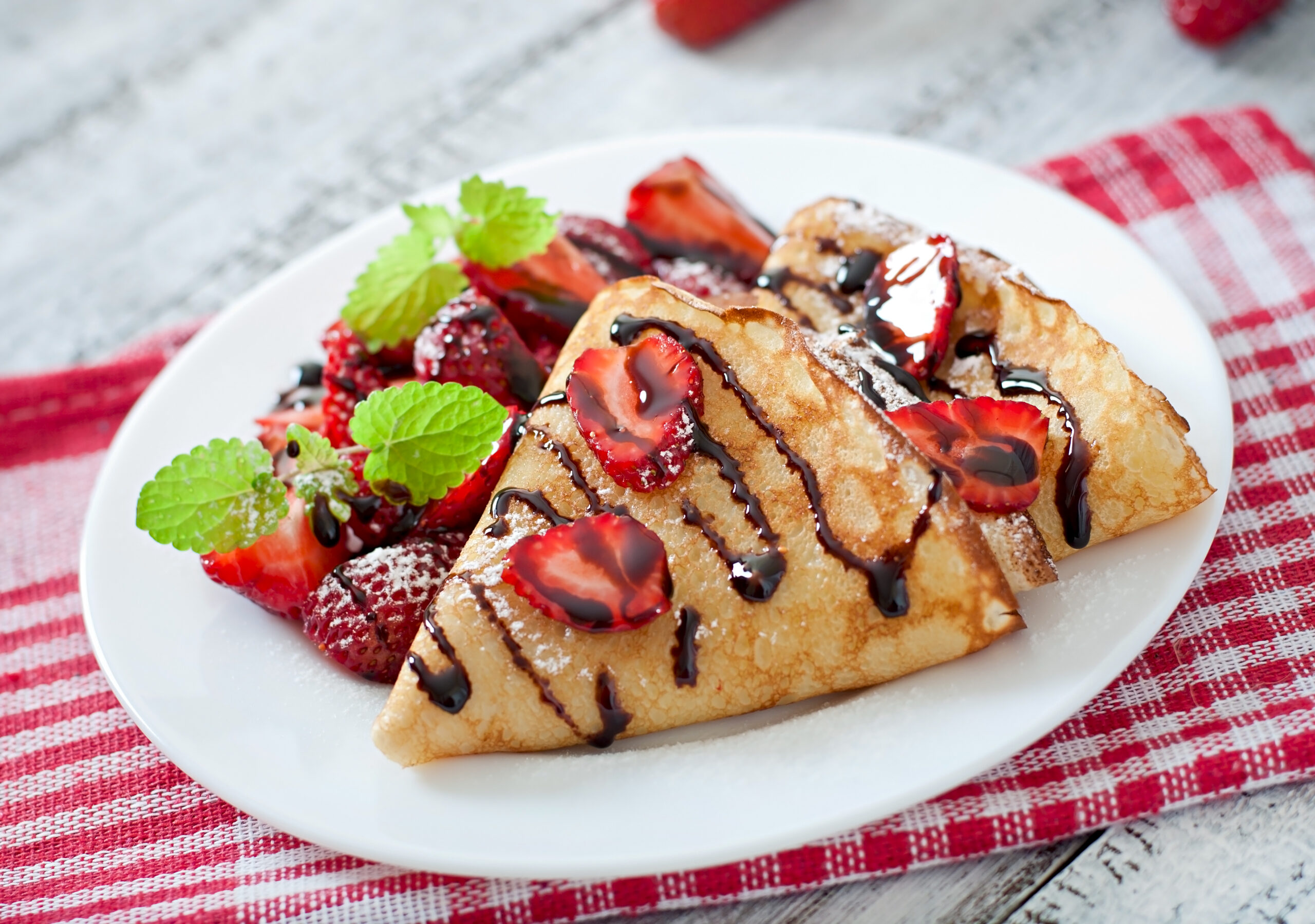
Crepes tear when the process is not controlled.
In commercial kitchens, this usually comes from inconsistent batter, unstable heat, or incorrect handling. Because crepes are thin, even small mistakes show up immediately during cooking.
Fixing tearing requires stabilizing the system, not reacting to individual mistakes.
When batter, heat, and timing are consistent, crepes become predictable.
Where Tearing Happens
Crepes usually tear during key handling points:
While spreading batter
During flipping
When lifting from the cooking surface
Each stage depends on proper structure. If the crepe has not set evenly, it will not hold together.
Tearing is a result of weak structure, not just poor technique.
Root Causes of Crepe Tearing
Inconsistent Batter
Batter is the foundation. If it changes from batch to batch, results change.
Thin batter spreads too far and creates weak areas. Thick batter does not spread evenly, creating uneven cooking. Both lead to tearing.
Unstable Heat
The cooking surface must stay consistent.
If heat is too low, the crepe does not set properly. If it is too high, parts of the crepe cook too fast while others remain soft.
This imbalance creates fragile spots that tear during handling.
Flipping Too Early
Timing is one of the most common issues.
If the crepe is flipped before it has fully set, it will not have enough structure to hold together.
Waiting until the crepe releases naturally is critical.
Uneven Spreading
Batter must be spread immediately.
If spreading is delayed or uneven, the crepe will have inconsistent thickness. Thin areas cook faster and become fragile, while thicker areas stay soft.
This creates weak points.
Improper Tools
Using the wrong tools increases damage.
A thick or rigid spatula applies too much pressure. A thin, flexible spatula allows smooth lifting and reduces stress on the crepe.
Why Tearing Gets Worse in Commercial Kitchens
At higher volume, small issues repeat quickly.
Different staff prepare batter differently. Heat shifts during service. Speed increases pressure on timing.
These factors create variability across batches.
Without a controlled system, tearing becomes a recurring operational issue.
The Role of Batter Consistency
Consistency starts before cooking.
Alamarra’s Original Style Crepe Mix is designed to produce stable batter using a simple just-add-water process.
This removes variation from ingredient measurement and mixing differences.
The batter can be used immediately after mixing. If it sits for a long period, it should be stirred again before use to maintain uniform consistency.
Stable batter reduces the most common cause of tearing.
Heat and Equipment Control
Heat must be consistent from start to finish.
The cooking surface should be fully preheated before use. Once service begins, temperature should remain stable.
Fluctuating heat leads to uneven cooking, which creates weak areas.
Equipment condition also matters. Uneven surfaces or inconsistent burners affect results.
Stable equipment supports consistent structure.
Technique That Prevents Tearing
Technique should be controlled and repeatable.
Spread batter immediately in a smooth motion to create an even layer.
Flip only after the crepe has fully set and releases naturally.
Use light, controlled handling when lifting or turning.
Overhandling or rushing increases stress on the crepe.
Consistent technique supports a consistent process.
Batch Management During Service
Batter performance can change during long service periods.
As batter sits, separation can occur. This affects texture and consistency.
Stirring periodically keeps the batter uniform.
Avoid adding extra liquid during service unless required, as this creates inconsistency across batches.
Keeping batter uniform throughout service helps maintain stable results.
Preventing Tearing Long-Term
Short-term fixes do not solve recurring issues.
Long-term prevention requires a controlled system:
Use consistent batter across all batches
Maintain stable cooking temperature
Standardize technique across staff
Use proper tools
Monitor batter condition during service
When these are consistent, tearing becomes uncommon.
Impact on Waste and Output
Tearing affects more than product quality.
Each failed crepe must be remade. This increases ingredient usage, slows production, and creates delays during peak service.
In high-volume kitchens, this adds up quickly.
Reducing tearing improves both efficiency and cost control.
Why Crepe Systems Need Control
Crepes are less forgiving than thicker batter items.
They require precision in spreading, timing, and heat. Without consistency, small errors become visible immediately.
This is why crepe production benefits from standardized systems.
Controlled inputs lead to predictable output.
FAQs About Crepe Tearing
Crepes tear when they have not fully set or lack structure. This usually happens due to inconsistent batter or flipping too early before the crepe has properly cooked.
Yes. Inconsistent batter creates uneven thickness and weak areas, which leads to tearing during spreading, flipping, or removal from the cooking surface.
Crepe batter can be used immediately. If it sits for extended periods, it should be stirred again to maintain proper consistency and performance.
A thin, flexible spatula is best. It allows smooth lifting and flipping without applying too much pressure to the crepe structure.
Yes. A consistent crepe mix reduces variability in batter performance, which helps prevent tearing during cooking and handling.
A More Reliable Way to Prevent Crepe Tearing
Crepe tearing is a consistency issue.
When batter, heat, and technique are controlled, results become predictable. When they are not, tearing continues regardless of experience.
Alamarra’s Original Style Crepe Mix provides a stable foundation that helps reduce tearing and improve consistency in commercial kitchens.