
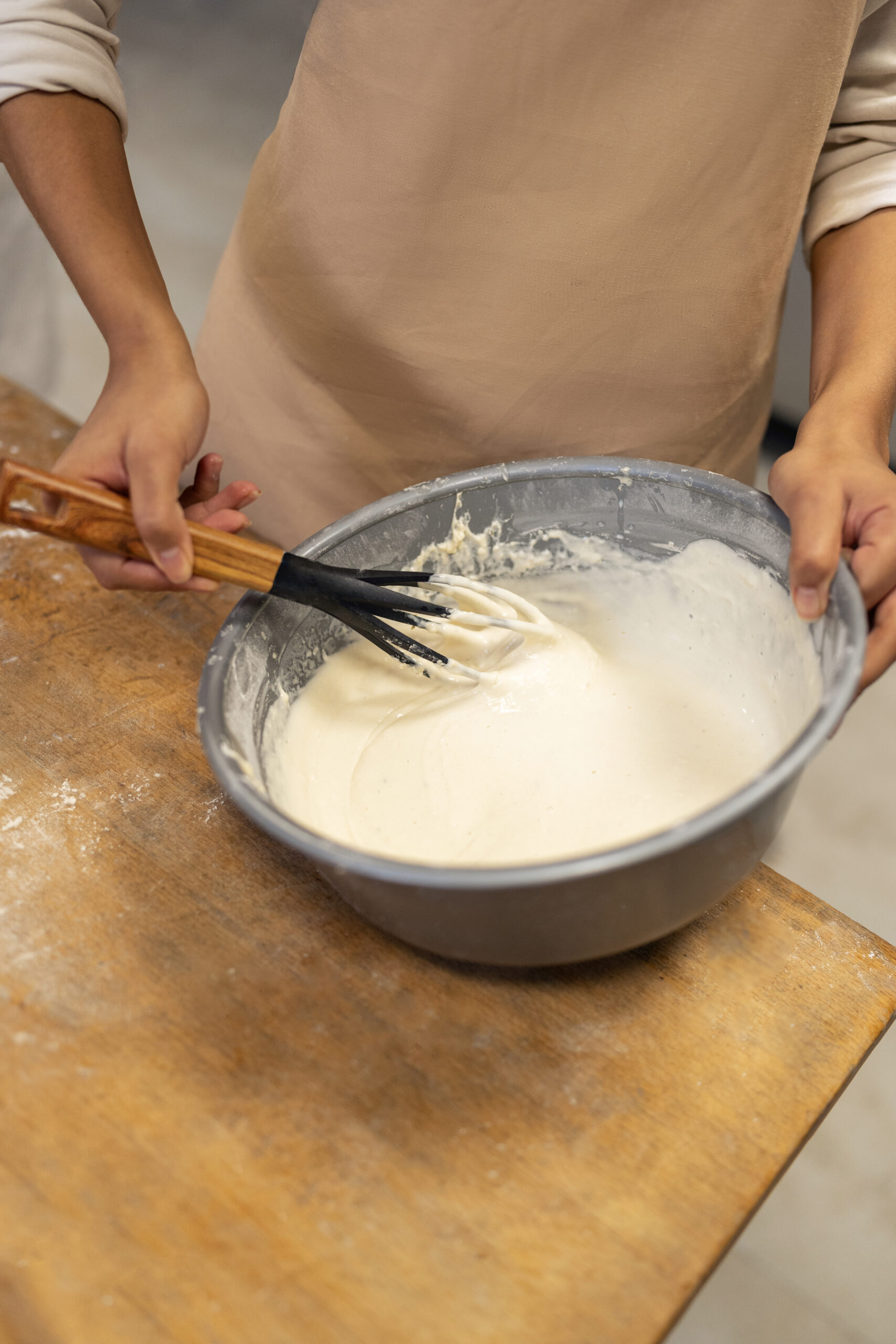
Inconsistent batter is not a minor issue.
In multi-location kitchens, it creates operational risk across every part of the system. What starts as a small variation at one location can quickly affect product quality, service speed, and brand consistency across the entire operation.
Crepe production is especially sensitive to these changes.
When batter consistency is not controlled, output becomes unpredictable, and that unpredictability creates risk at scale.
Consistency is the foundation of control.
Why Batter Consistency Matters More at Scale
At a single location, experienced staff can adjust.
They may correct batter thickness, modify technique, or compensate for small inconsistencies. In multi-location operations, this approach does not work.
Different teams prepare batter differently.
Small variations multiply across locations.
What seems like a minor issue becomes a system-wide problem when scaled.
The Most Common Risks of Inconsistent Batter
Product Quality Variation
When batter changes, the final product changes.
Crepes may vary in thickness, texture, and flexibility. This affects appearance, taste, and overall customer experience.
Inconsistent quality weakens brand reliability across locations.
Increased Waste
Inconsistent batter leads to failed batches.
Crepes may tear, cook unevenly, or require remakes. Each failure increases ingredient usage and reduces efficiency.
At scale, this creates measurable cost impact.
Slower Service
Staff must adjust when batter is inconsistent.
They may spend time correcting texture, adjusting cook time, or remaking items. This slows down production and affects service speed.
Delays compound during peak periods.
Training Inconsistency
Training depends on stable processes.
If batter behaves differently between batches or locations, staff cannot rely on a consistent method. This increases confusion and slows onboarding.
Inconsistent inputs create inconsistent training outcomes.
Operational Drift Across Locations
Over time, locations may adjust batter preparation differently.
These small changes create variation between sites. This leads to different results across the brand.
Operational drift reduces control and consistency.
Why Crepe Systems Are More Sensitive to Variation
Crepes require precision.
Thin batter, even spreading, and controlled cooking all depend on consistency. Small changes in batter immediately affect performance.
Compared to thicker products, crepes have less tolerance for variation.
This makes batter consistency critical for reliable output.
The Hidden Cost of Inconsistency
The impact of inconsistent batter is not always immediate.
It builds over time.
Costs include:
- Increased ingredient waste
- Slower service
- Lower customer satisfaction
- Reduced repeat business
These effects accumulate across locations.
Small inefficiencies become significant at scale.
Stabilizing Batter Across Locations
The most effective way to reduce risk is to control the starting point.
Alamarra’s Original Style Crepe Mix provides a consistent, just-add-water batter that removes variation from measuring and mixing.
Each location begins with the same formulation.
This reduces differences before production starts.
Standardization as Risk Management
Consistency is a form of risk control.
Standardized batter allows operators to define a single process that works across all locations.
This reduces:
- Variation in preparation
- Differences in output
- Need for constant adjustment
Standardization creates predictable performance.
Improving Control Across Teams
Multi-location kitchens rely on multiple teams.
Each team may have different experience levels and work habits. Without a stable system, these differences create inconsistent results.
A consistent batter reduces variability between teams.
Controlled inputs lead to more consistent execution.
Supporting Consistent Training
Training becomes more effective when the process is stable.
With consistent batter, staff learn one method and apply it across all locations. This reduces confusion and improves performance.
Simplified systems improve training outcomes.
Reducing Equipment-Related Variation
Equipment differences can affect cooking.
Variations in heat output and surface condition impact how batter behaves. Inconsistent batter makes these issues worse.
A stable batter reduces sensitivity to equipment differences.
Consistent inputs help stabilize output.
Maintaining Performance Under Pressure
High-volume service increases risk.
When production speeds up, there is less time to adjust for inconsistency. Systems that require constant correction break down under pressure.
A consistent batter supports steady production.
Predictable performance is critical during peak service.
Ingredient Control and Reliability
Consistency depends on reliable ingredients.
Alamarra’s Original Style Crepe Mix is GMO free and preservative free, designed for stable performance in commercial kitchens.
Gluten free options are produced in separate facilities to reduce cross-contact risk.
Controlled ingredients support consistent results.
Why Reducing Risk Improves Performance
Reducing variability improves efficiency.
When batter is consistent, staff can focus on execution instead of adjustment. This improves speed, reduces waste, and supports consistent quality.
Controlled systems perform better across all locations.
FAQs About Inconsistent Batter Risks
Inconsistent batter leads to variation in product quality, increased waste, slower service, and reduced control across locations, which affects overall performance.
Crepes require thin, even batter and precise cooking, so small variations immediately impact texture, structure, and overall product quality.
When batter behaves differently, staff cannot rely on a consistent process, which slows training and increases errors during production.
Yes. Variation between locations creates inconsistent customer experiences, which weakens brand reliability and trust.
Yes. Stable batter reduces errors, minimizes adjustments, and allows staff to maintain a steady workflow during service.
A More Controlled Approach to Crepe Production
Inconsistent batter creates risk.
At scale, that risk affects quality, efficiency, and brand performance across every location.
Controlling batter consistency is one of the most effective ways to reduce variation and improve results.
Alamarra’s Original Style Crepe Mix provides a stable foundation that helps multi-location kitchens maintain consistency, reduce waste, and operate with greater control.