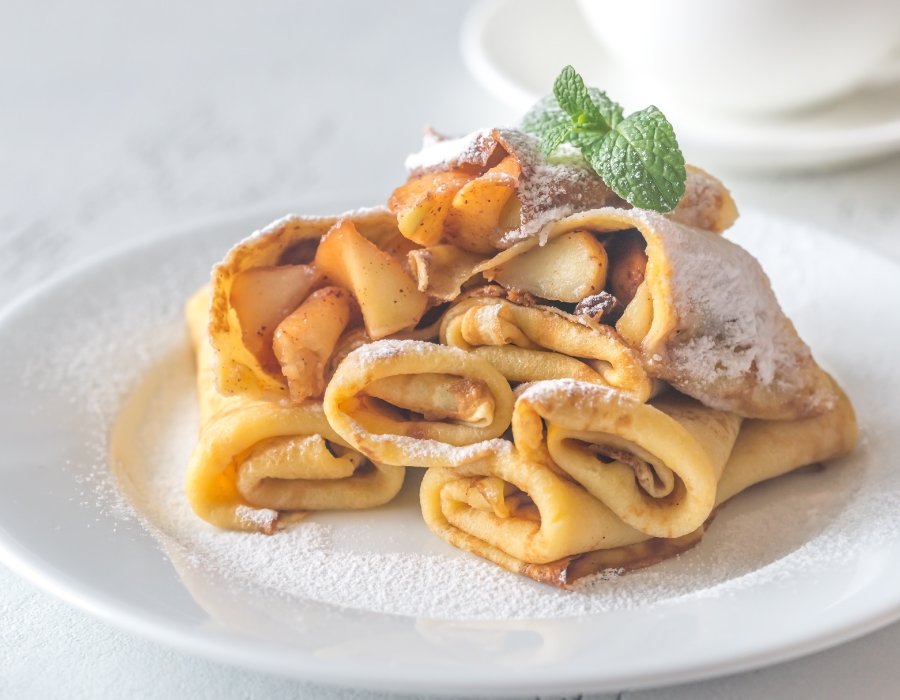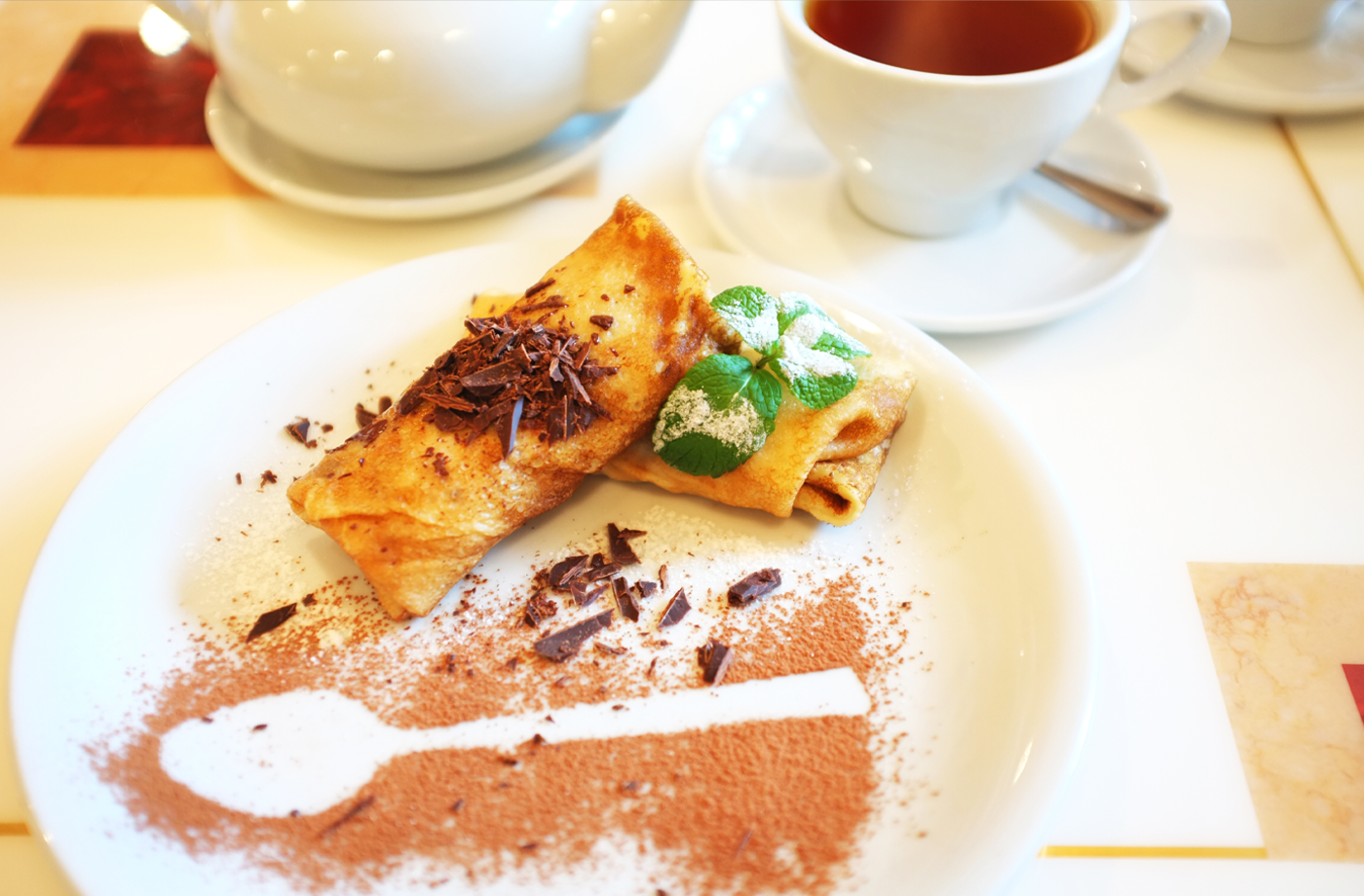
Posted on

Breakfast Crepe Menu Ideas for Cafés and Hotel Breakfast Programs

Breakfast Crepe Menu Ideas for Cafés and Hotels
  • Breakfast menus need to balance variety with execution.
  • Cafés and hotel breakfast programs often expand menus to meet demand, but more items usually mean more preparation, more ingredients, and more room for inconsistency. Over time, this slows service and makes operations harder to control.
  • Crepes offer a different approach.
  • They allow operators to build a wide range of breakfast menu items using a single, consistent base. This makes it possible to expand offerings without adding complexity to the kitchen.

Why Crepes Work for Breakfast Menus

  • Crepes are naturally flexible.
  • They can be used for both sweet and savory dishes without changing the production process. This allows kitchens to serve different customer preferences using the same workflow, which is especially important in fast-paced breakfast environments.
  • Alamarra’s Original Style Crepe Mix is designed to deliver consistent performance in commercial kitchens, helping teams maintain a stable process across every order.
  • When the base is consistent, the menu becomes easier to manage.
Build a Better Breakfast Menu with Alamarra Crepe Mix →

Breakfast Crepe Menu Ideas for Cafés and Hotels

Building a Strong Breakfast Crepe Menu

  • A well-structured menu does not need to be large.
  • It needs to be clear, balanced, and easy to execute. Crepes make this possible because one base can support multiple categories without requiring separate preparation systems.
  • Most successful breakfast crepe menus are built around three core areas: sweet options, savory items, and a small number of premium offerings.

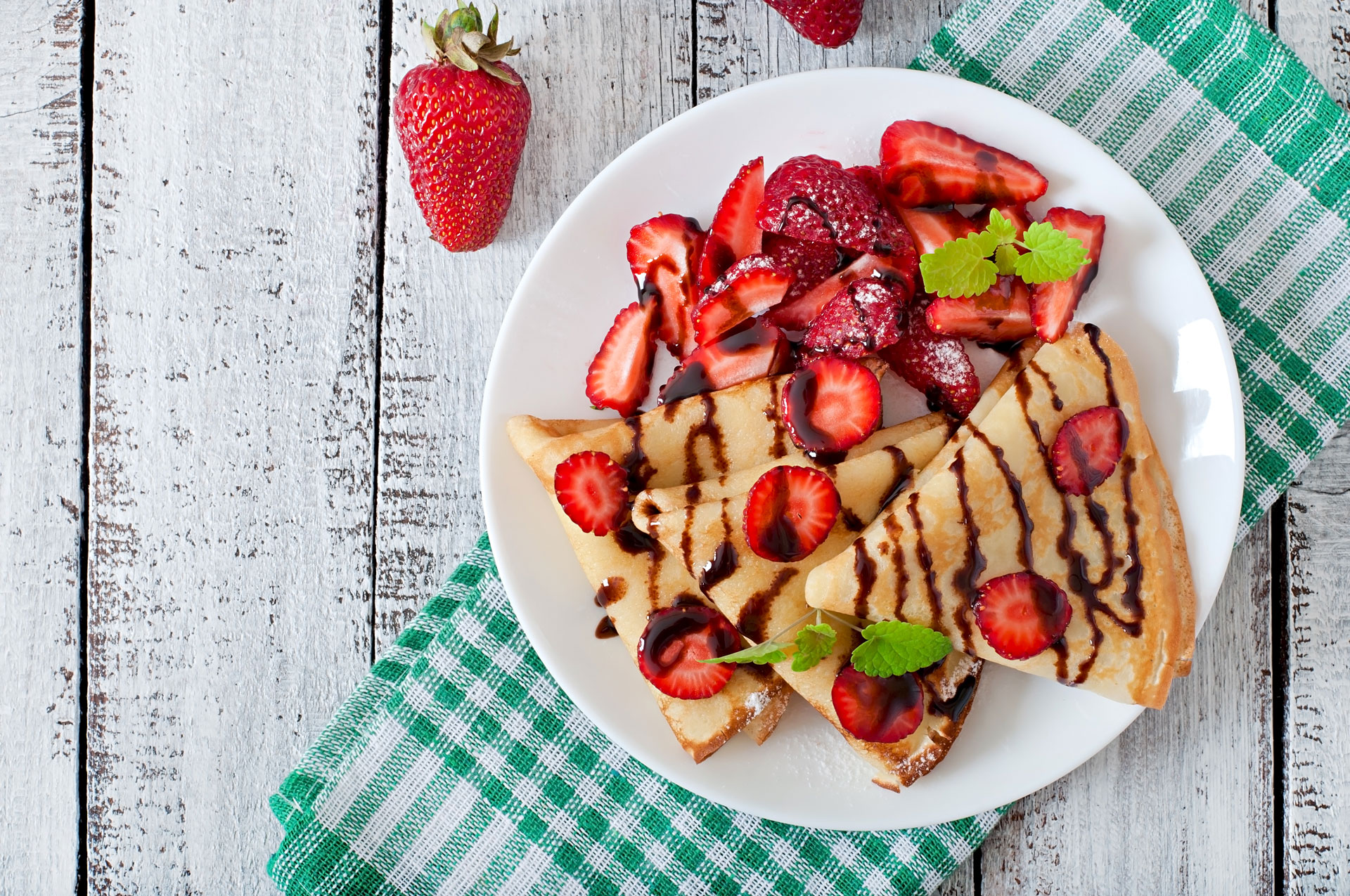
Sweet Breakfast Crepes

  • Sweet crepes are the foundation of most breakfast menus.
  • They are easy to prepare, widely accepted, and quick to serve. They also allow for simple customization depending on what ingredients are available.
  • In a café setting, these items work well as everyday menu staples. In hotel environments, they are ideal for buffet or made-to-order stations because they are predictable and consistent.
  • Because the process stays the same, adding variations does not slow down service.

Savory Breakfast Crepes

  • Savory crepes expand the menu beyond traditional breakfast items.
  • They allow cafés and hotels to offer more filling options without introducing additional complexity. Instead of managing different batters or cooking methods, staff continue using the same process with different fillings.
  • This creates a more complete breakfast offering while maintaining operational efficiency.
  • Savory crepes are especially useful for customers who want something more substantial without increasing preparation time.

Premium and Upsell Options

  • Crepes also support higher-value menu items.
  • By adding specialty ingredients or seasonal variations, operators can create premium options that increase average ticket size. These items feel different to the customer but require no change to the base process.
  • This is one of the biggest advantages of crepe-based menus.
  • Upselling becomes easier because it does not require additional preparation systems.

Adapting Crepe Menus for Different Operations

  • Cafés and hotels operate differently, but crepes work well in both environments.
  • Cafés typically focus on speed and customization. Crepes fit this model because they are quick to produce and easy to personalize without slowing down service.
  • Hotels, on the other hand, prioritize consistency and volume. Crepes support this by offering a repeatable process that can handle continuous production during breakfast service.
  • In both cases, the same system applies.
  • One base allows different service models without changing how the kitchen operates.

Supporting Dietary and Menu Trends

  • Modern breakfast menus need flexibility.
  • Customers expect options that fit different preferences, including lighter items and dietary-specific choices. Crepes can meet these expectations without adding new processes.
  • Alamarra’s Original Style Crepe Mix Gluten Free allows operators to offer gluten-free options while maintaining the same workflow.
  • This makes it easier to expand the menu without increasing complexity or training requirements.

Seasonal Menu Opportunities

  • Menus that change slightly throughout the year perform better.
  • Crepes make seasonal updates simple because the base stays the same. Operators can introduce limited-time offerings or seasonal flavors without adjusting the production process.
  • This keeps the menu fresh while maintaining consistency behind the scenes.

Operational Benefits of Crepe-Based Menus

  • Menu design directly affects kitchen performance.
  • When a menu relies on multiple systems, it becomes harder to maintain speed and consistency. Crepe-based menus reduce this complexity by keeping production simple.
  • This leads to:
    • Faster execution during peak hours
    • Easier staff training
    • More consistent output across shifts
  • These improvements are not separate from the menu. They are a result of how the menu is built.

Ingredient Consistency and Performance

  • Consistency in ingredients supports consistency in execution.
  • Alamarra’s crepe mixes are GMO free and preservative free. They are also soy free and contain zero trans fats. Gluten-free options are produced in separate facilities to reduce cross-contact risk.
  • Reliable ingredients help ensure that every crepe performs the same way, regardless of location or volume.

FAQs About Breakfast Crepe Menus

Crepes are versatile and easy to produce, allowing restaurants to offer both sweet and savory options using a single, consistent preparation process.

Yes. Crepes can be used in fast-paced café environments or high-volume hotel breakfast programs without changing the core production method.

No. With a consistent crepe mix, preparation is simple and repeatable, which supports efficient kitchen operations.

Yes. Crepes can be paired with lighter ingredients or gluten-free options to meet changing customer preferences.

Yes. Crepes can be upgraded with premium fillings or seasonal options, increasing average order value without changing the process.

They allow multiple menu items to be created from one base, reducing complexity while still offering variety to customers.

A Smarter Way to Build a Breakfast Menu

  • A successful breakfast menu is not defined by how many items it includes.
  • It is defined by how well those items can be executed.
  • Crepes allow restaurants to expand their offerings while keeping production simple and consistent. This makes them a strong fit for both cafés and hotel breakfast programs.
  • Alamarra’s Original Style Crepe Mix provides a consistent foundation that helps operators build flexible, reliable, and scalable breakfast menus.

Start Building Your Breakfast Crepe Menu Today →

Posted on

Allergen-Conscious Waffle Mix for Schools and Cafeterias

allergen conscious waffle mix school cafeteria preparation

In school and institutional food service, safety is not optional.


Every ingredient must meet strict standards. Every batch must be consistent. When waffles are part of the menu, the mix used must support both performance and compliance.


That is why schools and cafeterias use allergen-conscious solutions like Alamarra’s Pancake and Waffle Mix, built to deliver consistent results while supporting controlled ingredient handling.


In regulated environments, consistency and safety go together.

Why Allergen Awareness Matters in Institutional Food Service

Schools and cafeterias serve diverse populations with varying dietary needs.


Food allergies are a daily consideration. Even minor cross-contact risks can create serious issues.


This requires:

  • Careful ingredient selection
  • Clear labeling and traceability
  • Consistent preparation processes
  • Reduced exposure to common allergens

An inconsistent mix or unclear ingredient profile creates risk.

The Challenge of Managing Allergens at Scale

Institutional kitchens operate at high volume with strict guidelines.


Multiple staff members handle preparation. Production must move quickly while maintaining compliance.


This creates challenges such as:

  • Inconsistent ingredient handling
  • Increased risk of cross-contact
  • Complex preparation processes
  • Difficulty maintaining uniform results

When the process is complicated, risk increases.

A Standardized, Allergen-Conscious Mix

The most effective way to reduce risk is to simplify the process.


Alamarra’s Pancake and Waffle Mix is formulated to support consistent preparation with a simple just-add-water method.


Fewer ingredients reduce handling. A standardized process reduces variation.


Add water, mix, and cook. The batter performs consistently across every batch.


This supports:

  • Controlled preparation
  • Reduced handling steps
  • Consistent output

For schools and cafeterias, simplicity supports safety.


For institutions focused on safety and consistency, Alamarra’s Pancake and Waffle Mix provides a reliable solution for daily service.


Try Alamarra’s Pancake & Waffle Mix →

Supporting Compliance and Food Safety Standards

Institutional buyers must meet internal policies and regulatory expectations.


Ingredient clarity and production practices play a key role.


Alamarra produces gluten free mixes in separate facilities to reduce cross-contact risk.


This supports:

  • Allergen management protocols
  • Safer ingredient handling
  • Clear communication with staff and stakeholders

Consistency in production supports compliance across all levels.

Why Process Control Reduces Risk

Allergen management depends on controlling variables.


Every additional ingredient increases handling steps. More handling creates more opportunities for cross-contact.


A simplified mix reduces:

  • Ingredient exposure
  • Preparation variation
  • Points of failure in the process

When the process is controlled, outcomes become more predictable and safer.

Standard Mix vs Allergen-Conscious Commercial Mix

Factor Standard Mix Allergen-Conscious Mix
Ingredient Handling Multiple steps Simplified
Consistency Variable Stable
Risk Management Higher Reduced
Training More complex Easier
Output Inconsistent Predictable
Reducing complexity improves both safety and performance.

Consistency Across Staff and Shifts

Schools and cafeterias often operate with rotating staff.


Different team members prepare food throughout the day. Consistency depends on having a process that everyone can follow.


A standardized mix supports:

  • Uniform preparation
  • Reduced training time
  • Consistent results across shifts
  • Lower risk of preparation errors

This allows teams to maintain quality while meeting safety requirements.

Ingredient Standards That Support Institutional Needs

Ingredient transparency is essential in institutional food service.


Alamarra’s mixes are GMO free and preservative free. They are also soy free and contain zero trans fats.


These standards support:

  • Clear ingredient communication
  • Alignment with institutional policies
  • Consistent product quality

This helps institutions meet both operational and dietary requirements.

Scaling Safe Food Service Operations

Institutional kitchens serve large volumes daily.


Scaling production increases complexity, especially when managing allergens.


A standardized mix supports scaling by:

  • Maintaining consistent preparation methods
  • Reducing variability across batches
  • Supporting uniform results across locations
  • Simplifying compliance procedures

Consistency at scale improves both efficiency and safety.

FAQs About Allergen Free Waffle Mix for Schools

An allergen free waffle mix is designed to reduce exposure to common allergens while maintaining consistent performance in food service environments.
Schools use these mixes to support food safety, reduce risk, and meet dietary requirements for students with food allergies.
Yes. Simplified ingredients and controlled production processes reduce the risk of cross-contact and preparation errors.
Yes. Commercial mixes are designed to deliver consistent results while supporting safe preparation in large-scale operations.
It reduces the number of ingredients handled and simplifies preparation, lowering the chance of cross-contact during production.
Yes. Clear ingredient information supports compliance, communication, and safe food service practices.

A Safer, More Consistent Approach to Waffle Service

Institutional food service requires both safety and reliability.


When preparation is simplified and ingredients are controlled, kitchens operate more effectively.


Alamarra’s Pancake and Waffle Mix provides a consistent foundation that supports safe, reliable waffle production in schools and cafeterias.


Order Alamarra Pancake & Waffle Mix →

Posted on

Waffle Mix for Hotels: How to Deliver Consistent Breakfast Service

hotel breakfast waffle station consistent waffle mix

Hotel breakfast service runs on consistency.


Guests expect the same quality every morning, whether it is a weekday rush or a full weekend occupancy. When waffles are part of the menu, even small inconsistencies in batter or cooking can affect guest experience.


That is why many hotel operators use professional solutions like Alamarra’s Pancake and Waffle Mix, designed to deliver consistent results with a simplified preparation process.


In a hospitality setting, consistency is not just about food. It is about maintaining brand standards.

The Challenge of Hotel Breakfast Operations

Hotels operate under different conditions than traditional restaurants.


Breakfast service is time-bound, often self-serve or semi-assisted, and must handle unpredictable volume. Staffing levels may vary, and turnover can be high.


This creates challenges such as:

  • Inconsistent batter preparation across shifts
  • Variable waffle texture during peak hours
  • Slower service when equipment is in constant use
  • Difficulty maintaining product quality with rotating staff

When batter is not consistent, the entire breakfast line becomes less reliable.

Why Waffle Mix Matters in Hospitality

The mix used for waffles directly impacts both quality and efficiency.


Standard mixes or scratch preparation require additional ingredients and adjustments. This introduces variability, especially when multiple team members prepare batter.


Alamarra’s Pancake and Waffle Mix is formulated to provide consistent performance with a just-add-water process.


This simplifies preparation and ensures that batter behaves the same way every time it is used.


For hotels, this means:

  • More predictable results across shifts
  • Faster prep during peak breakfast hours
  • Less dependence on staff experience

For hotel breakfast programs that require consistency without added complexity, Alamarra’s Pancake and Waffle Mix provides a reliable foundation for daily service.


Try Alamarra’s Pancake & Waffle Mix →

Delivering Consistent Guest Experience

Guests expect reliability.


A waffle that is undercooked, too soft, or inconsistent in texture affects perception of the entire breakfast offering.


Consistency in batter leads to:

  • Uniform waffle appearance
  • Reliable cooking times
  • Stable texture across multiple servings

In a hospitality environment, this consistency supports guest satisfaction and repeat visits.

What Affects Waffle Consistency

Waffle performance depends on formulation and heat control.


Fat content contributes to structure and surface texture. Moisture levels influence how the batter spreads and cooks.


Heat plays a key role in browning and texture development.


When batter is inconsistent, these factors change from one batch to another.


A properly formulated mix balances these variables, allowing the waffle to cook predictably under consistent heat conditions.

Waffle Mix vs Scratch for Hotel Kitchens

Factor Scratch or Standard Mix Alamarra Waffle Mix
Ingredients Needed Multiple components Just water
Consistency Variable Stable
Prep Time Higher Reduced
Training Requires experience Easy to standardize
Output Inconsistent Predictable

In hotel environments, fewer steps and consistent results improve overall service quality.

Supporting Self-Serve and High-Traffic Stations

Many hotels offer self-serve waffle stations.


These setups require a batter that performs consistently regardless of who is using it. Guests are not trained cooks, so the mix must be reliable under varied conditions.


A consistent waffle mix helps:

  • Maintain quality across guest use
  • Reduce issues with undercooking or uneven texture
  • Improve overall guest experience

This is especially important in high-traffic breakfast periods.

Wholesale Supply for Hotel Operations

Supply consistency is essential for hotel procurement.


Alamarra’s mixes are used across hospitality, restaurants, and food service operations throughout the US and Canada because they support reliable production.


Using a standardized mix allows hotel operations to:

  • Maintain consistent product quality across locations
  • Simplify inventory management
  • Support daily breakfast service without interruptions
  • Scale across multiple properties

For multi-location hotel groups, consistency across properties is critical.

Ingredient Standards and Guest Expectations

Guests increasingly pay attention to ingredient quality.


Alamarra’s mixes are GMO free and preservative free. They are also soy free and contain zero trans fats.


Gluten free products are produced in separate facilities to reduce cross-contact risk.


These standards help hotels meet guest expectations while maintaining consistent performance.

Improving Efficiency in Breakfast Service

Breakfast service is one of the most time-sensitive operations in hospitality.


Efficiency depends on preparation speed, equipment flow, and product consistency.


A simplified mix improves:

  • Speed of preparation
  • Consistency during peak service
  • Ease of training for new staff
  • Overall workflow

Reducing steps in preparation allows teams to focus on service and guest interaction.

FAQs About Waffle Mix for Hotels

The best waffle mix for hotels delivers consistent results, requires minimal preparation, and performs reliably during high-traffic breakfast service. A just-add-water formulation simplifies operations and improves consistency.
Hotels use waffle mix to standardize preparation, reduce errors, and maintain consistent quality across shifts and staff. This supports reliable breakfast service.
Yes. A consistent mix performs well in self-serve stations because it produces reliable results even when used by guests.
It reduces preparation steps, simplifies training, and allows staff to maintain consistent output during peak hours.
Yes. Consistency directly affects guest satisfaction and helps maintain brand standards across locations.
Yes. A standardized mix allows hotels to maintain the same product quality across different properties.

A More Reliable Approach to Hotel Breakfast Service

Hotel breakfast programs depend on consistency.


When waffle batter is standardized, service becomes easier to manage and guest experience improves.


Alamarra’s Pancake and Waffle Mix provides a consistent foundation for hotel kitchens, supporting reliable results across daily breakfast service.


Order Alamarra Pancake & Waffle Mix →

Posted on

How to Make Waffles from Pancake Mix

waffles from pancake mix crispy edges waffle iron

If your waffles from pancake mix turn out soft instead of crispy, you are not alone.


Most people try it at least once and end up with pale, floppy waffles that lack structure.


That is exactly why many turn to professionally formulated options like Alamarra’s Pancake and Waffle Mix, which is designed to deliver consistent crispness without extra steps.


This is not just a cooking mistake. It comes down to how the mix is formulated.

Why Grocery Store Pancake Mix Falls Short

Pancake batter and waffle batter are fundamentally different.


Pancakes are meant to be soft and tender. Waffles require more structure and a crisp exterior.


Most grocery store pancake mixes are not built for that.
That is why results often include soft texture, uneven browning, and inconsistent batches.


Waffle batter typically needs 15 to 20 percent more fat than pancake batter. This is what creates that crisp outer layer.


Without that built into the mix, you are forced to adjust the batter yourself.

The Workaround Most People Use

To fix this, most recipes suggest adding oil or melted butter.


This can help, but it introduces variability.


You end up adjusting ratios, changing texture from batch to batch, and adding extra prep steps.


This approach can work occasionally, but it is not consistent, especially in higher-volume settings.

The Better Solution: A Professional 2-in-1 Mix

Instead of modifying a mix that was never designed for waffles, start with one that is.


Alamarra’s Pancake and Waffle Mix is formulated as a true 2-in-1 solution with the correct fat-to-flour ratio already built into the mix.


With a standard retail mix, you need to add oil or butter to get crisp waffles.


With Alamarra’s professional mix, you only need to add water. The formula is already balanced for both waffles and pancakes.


This allows you to produce waffles that are crisp on the outside, structured on the inside, and consistent across every batch.

How to Make Waffles from Pancake Mix

Mix the Batter

Combine the mix with water and whisk until smooth.


Because the formula is already balanced, there is no need to adjust ingredients.

Let It Rest Briefly

Let the batter sit for a few minutes before cooking.


This helps improve structure and texture during cooking.

Preheat the Waffle Iron

Consistent heat is essential.


A properly heated waffle iron ensures even cooking and reliable results.

Cook Until Crisp

Pour the batter and cook until golden brown.


Avoid opening the waffle iron too early, as this affects structure and texture.


With the right mix, you will see the difference immediately in both crispness and consistency.

Standard Pancake Mix vs Alamarra’s 2-in-1 Mix

Factor Standard Grocery Pancake Mix Alamarra Pancake and Waffle Mix
Ingredients Needed Water plus oil or butter Just water
Texture Soft and often floppy Crisp exterior and structured
Consistency Varies by adjustment Reliable every batch
Prep Time More steps required Simplified
Performance Not designed for waffles Optimized 2-in-1 formula

One requires constant adjustment. The other is built to perform.

For Commercial Kitchens: Why Consistency Matters at Scale

In a commercial kitchen, consistency directly impacts performance.


Soft waffles affect service speed, product quality, and customer expectations.


Operators need batch consistency, predictable cook times, and reliable yield.


Alamarra has been producing professional-grade mixes since 2002, and their products are used by creperies, restaurants, hotels, food trucks, and institutions throughout the US and Canada.


Instead of adjusting recipes during service, operators rely on mixes that perform the same way every time.

Clean Ingredients Still Matter

Performance is only part of the equation.


Alamarra’s mixes are designed with a clean, intentional formulation.


They are GMO free and preservative free. They are also soy free and contain zero trans fats.


Alamarra follows strict allergen-conscious manufacturing practices, including separate facilities for gluten free products.


This ensures both consistency and quality across every batch.

Wholesale and High-Volume Use

For businesses, efficiency and consistency directly affect output.


Alamarra’s mixes are used throughout the US and Canada because they simplify production while maintaining quality.


Using a professional mix allows teams to reduce prep time, maintain consistent results, train staff more easily, and scale output without recipe adjustments.


For operations sourcing in bulk, Alamarra provides solutions designed for both small kitchens and high-volume environments.

Simple Techniques That Improve Results

Even with the right mix, technique still matters.


Maintain consistent waffle iron temperature. Use even batter portions. Avoid overmixing.


These small steps help maximize consistency and final texture.

FAQs About Waffles from Pancake Mix

Yes, but standard mixes require adjustments to achieve crispness and structure.
Most pancake mixes lack the fat content needed for crisp edges, which is why additional oil or butter is often required.
With most grocery store mixes, yes. With a professionally formulated mix like Alamarra’s, no additional ingredients are needed.
Using a mix designed for both pancakes and waffles simplifies the process and improves consistency.
They allow for predictable results, faster prep, and easier scaling across multiple batches.

The Smarter Way to Make Waffles at Scale​

Making waffles from pancake mix can work, but it requires adjustments and added steps.


A better approach is starting with a mix designed to do both jobs correctly from the beginning.


Thousands of operators across North America rely on professional 2-in-1 mixes to deliver consistent results every time.


If you want crisp, repeatable waffles without extra steps, Alamarra’s Pancake and Waffle Mix gives you a more reliable foundation from the start.

Posted on

What Are the Risks of Inconsistent Batter in Multi-Location Kitchens?

Inconsistent batter is not a minor issue.


In multi-location kitchens, it creates operational risk across every part of the system. What starts as a small variation at one location can quickly affect product quality, service speed, and brand consistency across the entire operation.


Crepe production is especially sensitive to these changes.


When batter consistency is not controlled, output becomes unpredictable, and that unpredictability creates risk at scale.


Consistency is the foundation of control.

Why Batter Consistency Matters More at Scale

At a single location, experienced staff can adjust.


They may correct batter thickness, modify technique, or compensate for small inconsistencies. In multi-location operations, this approach does not work.


Different teams prepare batter differently.


Small variations multiply across locations.


What seems like a minor issue becomes a system-wide problem when scaled.

The Most Common Risks of Inconsistent Batter

Product Quality Variation

When batter changes, the final product changes.


Crepes may vary in thickness, texture, and flexibility. This affects appearance, taste, and overall customer experience.


Inconsistent quality weakens brand reliability across locations.

Increased Waste

Inconsistent batter leads to failed batches.


Crepes may tear, cook unevenly, or require remakes. Each failure increases ingredient usage and reduces efficiency.


At scale, this creates measurable cost impact.

Slower Service

Staff must adjust when batter is inconsistent.


They may spend time correcting texture, adjusting cook time, or remaking items. This slows down production and affects service speed.

Delays compound during peak periods.

Training Inconsistency

Training depends on stable processes.


If batter behaves differently between batches or locations, staff cannot rely on a consistent method. This increases confusion and slows onboarding.


Inconsistent inputs create inconsistent training outcomes.

Operational Drift Across Locations

Over time, locations may adjust batter preparation differently.


These small changes create variation between sites. This leads to different results across the brand.


Operational drift reduces control and consistency.

Why Crepe Systems Are More Sensitive to Variation

Crepes require precision.


Thin batter, even spreading, and controlled cooking all depend on consistency. Small changes in batter immediately affect performance.


Compared to thicker products, crepes have less tolerance for variation.


This makes batter consistency critical for reliable output.

The Hidden Cost of Inconsistency

The impact of inconsistent batter is not always immediate.


It builds over time.


Costs include:

  • Increased ingredient waste
  • Slower service
  • Lower customer satisfaction
  • Reduced repeat business

These effects accumulate across locations.


Small inefficiencies become significant at scale.

Stabilizing Batter Across Locations

The most effective way to reduce risk is to control the starting point.


Alamarra’s Original Style Crepe Mix provides a consistent, just-add-water batter that removes variation from measuring and mixing.


Each location begins with the same formulation.


This reduces differences before production starts.

Standardization as Risk Management

Consistency is a form of risk control.


Standardized batter allows operators to define a single process that works across all locations.


This reduces:

  • Variation in preparation
  • Differences in output
  • Need for constant adjustment

Standardization creates predictable performance.

Improving Control Across Teams

Multi-location kitchens rely on multiple teams.


Each team may have different experience levels and work habits. Without a stable system, these differences create inconsistent results.


A consistent batter reduces variability between teams.


Controlled inputs lead to more consistent execution.

Supporting Consistent Training

Training becomes more effective when the process is stable.


With consistent batter, staff learn one method and apply it across all locations. This reduces confusion and improves performance.


Simplified systems improve training outcomes.

Reducing Equipment-Related Variation

Equipment differences can affect cooking.


Variations in heat output and surface condition impact how batter behaves. Inconsistent batter makes these issues worse.


A stable batter reduces sensitivity to equipment differences.


Consistent inputs help stabilize output.

Maintaining Performance Under Pressure

High-volume service increases risk.


When production speeds up, there is less time to adjust for inconsistency. Systems that require constant correction break down under pressure.


A consistent batter supports steady production.


Predictable performance is critical during peak service.

Ingredient Control and Reliability

Consistency depends on reliable ingredients.


Alamarra’s Original Style Crepe Mix is GMO free and preservative free, designed for stable performance in commercial kitchens.


Gluten free options are produced in separate facilities to reduce cross-contact risk.


Controlled ingredients support consistent results.

Why Reducing Risk Improves Performance

Reducing variability improves efficiency.


When batter is consistent, staff can focus on execution instead of adjustment. This improves speed, reduces waste, and supports consistent quality.


Controlled systems perform better across all locations.

FAQs About Inconsistent Batter Risks

Inconsistent batter leads to variation in product quality, increased waste, slower service, and reduced control across locations, which affects overall performance.

Crepes require thin, even batter and precise cooking, so small variations immediately impact texture, structure, and overall product quality.

When batter behaves differently, staff cannot rely on a consistent process, which slows training and increases errors during production.

Yes. Variation between locations creates inconsistent customer experiences, which weakens brand reliability and trust.

Yes. Stable batter reduces errors, minimizes adjustments, and allows staff to maintain a steady workflow during service.

A More Controlled Approach to Crepe Production

Inconsistent batter creates risk.


At scale, that risk affects quality, efficiency, and brand performance across every location.


Controlling batter consistency is one of the most effective ways to reduce variation and improve results.


Alamarra’s Original Style Crepe Mix provides a stable foundation that helps multi-location kitchens maintain consistency, reduce waste, and operate with greater control.


Improve Consistency Across Your Locations Today →

Posted on Leave a comment

The Rise Of New Flavors

As we gained new customers, they asked what other crepe mix flavors we offered. Some customers even had suggestions. How about a rich dessert crepe to use for a crepe suzette? Another suggestion was a Buckwheat crepe.

We have developed all our products as complete mixes. You just add water.

We added extra eggs and vanilla to the Original mix and it became our Golden mix. It makes a great dessert crepe. We added cinnamon and vanilla to the Original to make our Hungarian mix. Try it with apple filling and vanilla ice cream. Or my favorite…mascarpone cheese and maple syrup.

The Buckwheat crepe took some time. We made two trips to France to find a taste we liked. We went to St Malo in Brittany on the North Sea. It is an amazing old walled city with a creperie at every turn. We ate at different creperie for every meal. We found a taste we liked and duplicated it for our Buckwheat mix.

The Chocolate crepe was an endurance test. The first attempts failed. The batter tasted like chocolate, the crepe smelled like chocolate as it cooked. The crepe lost its chocolate taste from the heat of cooking. We tried over thirty different cocoas before we found the one that kept its great chocolate taste.

Our Whole Wheat and Japanese crepe mixes were developed from customer suggestions.

Then it was on to gluten-free crepes. We purchased a mixer that is totally dedicated to our gluten-free products. We had three food science students from Ohio State as summer interns. They helped us learn how to replace the gluten items in our mixes. It took some time to perfect the texture and taste. Our gluten-free products are so good….you can’t tell they are gluten-free. We now offer gluten-free Original, Golden and Buckwheat crepe mix.

We have regular and gluten-free Pancake and Waffle mix.

We also have gluten-free Waffle Cone mix in three flavors. We have Original, Chocolate and Gingerbread. They are so good, the ice cream is just the ‘icing’ on the cone!

Posted on Leave a comment

Persistence Pays Off

More than fifteen years ago my husband dreamed of starting his own business. Once he decided on making crepes and using his grandmother’s recipe, the rest was smooth sailing. NOT!!

The first thing he needed was persistence…that’s the first “P” word.

A few examples of bumps in the road……

The recipe was excellent, but needed to be reworked. He tried freeze-drying, but that failed. He decided to use all dry ingredients and after months of work had a recipe that needed just an equal amount of water to make our crepe batter.

He settled on a co-packer in Michigan. After just a few short months, the co-packer decided we were too small and we were asked to find another for our product. He did find another and they were less than twenty miles from our home.

He placed an order for a needed ingredient and was told that it was unavailable, due to an outbreak of the avian flu. A mad scramble ensued and a new supply was found. The bad news was the price would be three times higher than previously paid. OUCH!!

And so the highs and lows continued but persistence paid off.

Now we needed new products to help grow the options available to our customers. Products will be the second “P” word.

Posted on Leave a comment

Chorizo and Mushroom Crepe

Chorizo and Mushroom Crepe

(Makes four 12″ Original Style crepes)

Ingredients

  • 2 Tsp oil
  • 1 lb chorizo sausage
  • 1 Pkg baby bella sliced mushrooms
  • 1 small onion chopped
  • 1 clove garlic minced
  • 1 tsp fresh thyme or 1/2 tsp dried thyme
  • 1/2 cup shredded cheddar cheese
  • 1/2 cup shredded pepper jack or monterey jack cheese
  • 1 container queso blanco dip, store bought

Instructions

  • 1
    Remove sausage from casing and brown in oil breaking up as it cooks.
  • 2
    Drain and remove the sausage saving about 2-3 tablespoons of drippings.
  • 3
    Cook the onion in the drippings until soft but do not brown.
  • 4
    Add the garlic and thyme and cook about one minute more. Do not brown garlic.
  • 5
    Add the sliced mushrooms and cook until tender stirring occasionally.
  • 6
    Gently fold the cooked sausage into the mushroom mixture.
  • 7
    Make four Alamarra Original crepes according to the package instructions.
  • 8
    Spread approximately three tablespoons of the queso dip on the crepes. Save some for the top of the crepes.
  • 9
    Place sausage mixture on top of queso.
  • 9
    Place sausage mixture on top of queso.
  • 10
    Top with the sausage mixture with a mixture of the shredded cheeses.
  • 11
    Fold the crepes to desired presentation and top with queso, heat if necessary, and shredded cheeses.
Posted on Leave a comment

Apple and Cream Cheese Crepe

Apple and Cream Cheese Crepe

(Makes four 12″ Hungarian crepes)

Ingredients

  • 2 large apples
  • 2 Tsp brown sugar
  • 8 Tsp apple butter (separated)
  • 4 oz cream cheese softened
  • 5 Tsp of butter (separated)
  • 1/2 tsp vanilla
  • 1/2 tsp cinnamon
  • 4 Tbs powdered sugar
  • Splash lemon juice

Instructions

  • 1
    Mix the apples, lemon juice, brown sugar and cinnamon in a bowl.
  • 2
    Melt three tablespoons of the butter in a small saute pan.
  • 3
    Saute the apple mixture for about ten minutes or until tender.
  • 4
    Add four tablespoons of apple butter to the apple mixture and cook on low for another one to two minutes. Keep warm adding a little water if it becomes too thick.
  • 5
    Beat the cream cheese, powdered sugar, and vanilla together until well incorporated. Add the remaining four tablespoons of apple butter and mix well.
  • 6
    Make four Alamarra Hungarian crepes according to the package directions.
  • 7
    Place some of the cream cheese mixture down the center of each crepe. Leave enough to put a small dollop on top of each crepe.
  • 8
    Top the cream cheese mixture with the apple mixture. Leave a small amount of the apple mixture to top the crepe.
  • 9
    Fold the crepes to desired presentation and top with remaining apple and cream cheese mixtures. Crepes can also be garnished with walnuts, pecans or a dusting of powdered sugar.